THIRD SPACE
AP
Growing up there were cliques. Everybody belonged to one group or another, I’m sure things have changed now but in the early 2000’s when I was but a wee lad growing up in Toronto, ON, there were cliques. We had the nerdy kids who spent their time talking to each other about how they were preparing for the upcoming test or how their assignments were coming along, they could usually be found in the library. There were the athletic kids who talked about last nights game every morning, keeping up with their favourite teams and staying back after school to shoot hoops or play a game on the baseball diamond. The alternative crowd was usually at the skate park, with all the subcultures of the alternative scene appearing on and around the half-pipes; emo’s, skaters, punks, burnouts, stoners, etc. A place for everyone and everyone in their place. It was a simpler time.
We had third spaces. Places that were neither work (in our case, school) nor home. Our parents and teachers specifically pointed them out to us and helped us to locate spaces that best fit our personalities, as we located our personalities. Through those shifts and changes we were able to experiment and try all sorts of new things if we were open to them. We could have joined after school clubs, recreational sports leagues, or simply spent time with our friends in various spaces around town that we may have found interesting at the time. A lot of the time, the hobbies and activities we spent time participating in as young people translated into adult hobbies which lead us to some of the only third spaces we felt comfortable inhabiting.
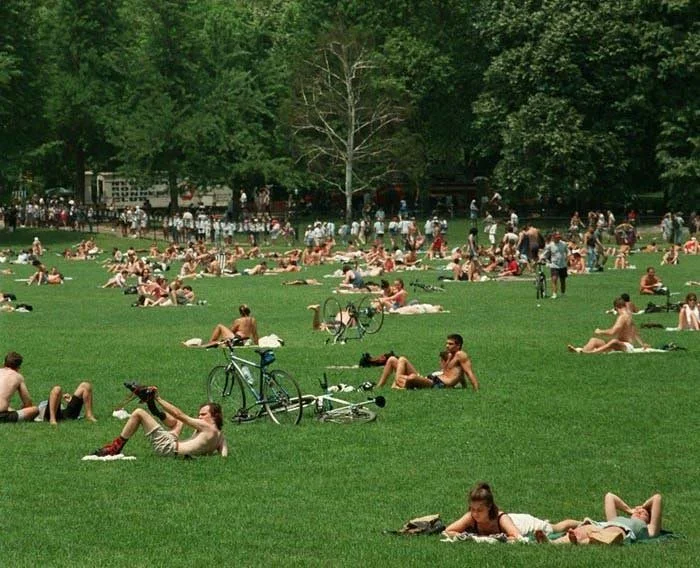
The curiosity lost to childhood as a consequence of adulthood leaves us lonely and unwilling to venture out into our communities in search of a third space we might enjoy spending time in. Places like cafés, libraries, rec centres and parks. These places promote a sense of spontaneity that encourages un-planned, un-scheduled social contact with low stakes that allows people to feel like community members without asking anything of them. It is non-transactional, you don’t have to leave your home intent on making a purchase. You can just be.
More and more third spaces are moving into online spaces, even dating has become a virtual endeavour that is becoming increasingly difficult to do in the real world. Malls no longer feel the way they once did, save for the holidays when people are out and shopping. The rest of the year there is very little traffic as people do most of their shopping online. People who do go to cafés usually do so to establish a secondary office as most of these places are populated with laptops, creating an effective barrier between headphoned individuals and the community. So as a result of this we find ourselves in an odd position where even if we are in a physical third space, we end up in a virtual one just out of habit and comfort. It’s easier for us to be anonymous strangers in comment sections than it is to put ourselves out there for others to reject. We would rather be left unfulfilled and not be inconvenienced than to spend some time figuring out what it is that truly re-connects us with our community.
The absence of third spaces in a city is reflected in its culture (or lack thereof) and wellbeing of its citizens. Something urban planners have been doing to help promote the growth of third spaces in their cities is the development of mixed-use zoning, which allows for citizens within a single neighbourhood to have access to housing, commerce, and public life without the need to travel very far. A local example of this is the redevelopment of St. Lawrence Market in Downtown Toronto, where they plan on adding an art gallery, a restaurant and café, a senior’s resource centre, and more.
Areas like this help third places flourish in a city with ease. The diverse foot traffic in the area means that people who live and work in the area are constantly moving through and keeping the space lively and bustling. The density of the area promotes walkability and negates the need to drive everywhere, making chance encounters and spontaneous meetings more likely to occur. While not transactional in nature, third spaces provide the traffic to keep small businesses alive when they are located nearby or are the space themselves.
While it is always inspiring to see government officials pulling in a direction that benefits the community, the great thing about third spaces is that they are entirely in the hands of the people. There doesn’t need to be any bureaucracy or red tape slowing things down or getting in the way. If you would like for there to be a place in your community for like minded individuals to get together and connect with each other, nothing is stopping you. All that needs to be done is for you to go out there and begin to reach out. If you are an individual who enjoys playing chess and would like for there to be people to play against at your local park, be the one who takes the first step and bring out your chess board. Challenge your community to a game, teach people how to play if they don’t know. Be an active and positive force in your community and do more than just work, rest, and repeat.
SOURCES
“Case – St. Lawrence Market North» Infrastructure Institute.” Infrastructure Institute» an Urban Hub for City-Building, 22 June 2022, infrastructureinstitute.ca/case-st-lawrence-market-north/. Accessed 14 Nov. 2025.
“Mixed-Use Development for Vibrant, Connected Neighborhoods | SPD.” Smartplanninganddesign.com, 2025, www.smartplanninganddesign.com/news/the-role-of-mixed-use-development-in-creating-vibrant-connected-neighborhoods.
Gerber, Joanna. “The Benefits of Blending Residential and Commercial Properties.” Www.canadianrealestatemagazine.ca, 2 July 2025, www.canadianrealestatemagazine.ca/news/benefits-blending-residentialcommercial-properties-mixed-use.
Mixed-Use, in. “Royal LePage Commercial Westhaven Toronto Brokerage.” Royal LePage Commercial Westhaven Toronto Brokerage, 12 Aug. 2025, www.rlpcommercialtoronto.com/commercial-real-estate-news/the-influence-of-cultural-spaces-in-mixed-use-projects. Accessed 14 Nov. 2025.
