NEPO BABY
I have this theory about Banksy. I secretly believe that she is not a man, and in addition, I have a suspicion that she comes from a very wealthy and powerful family. Maybe even being descended from aristocrats. I have no reason for believing this to be true; I just enjoy the theory. Would hold Banksy in such high regard should my theory come to be true?
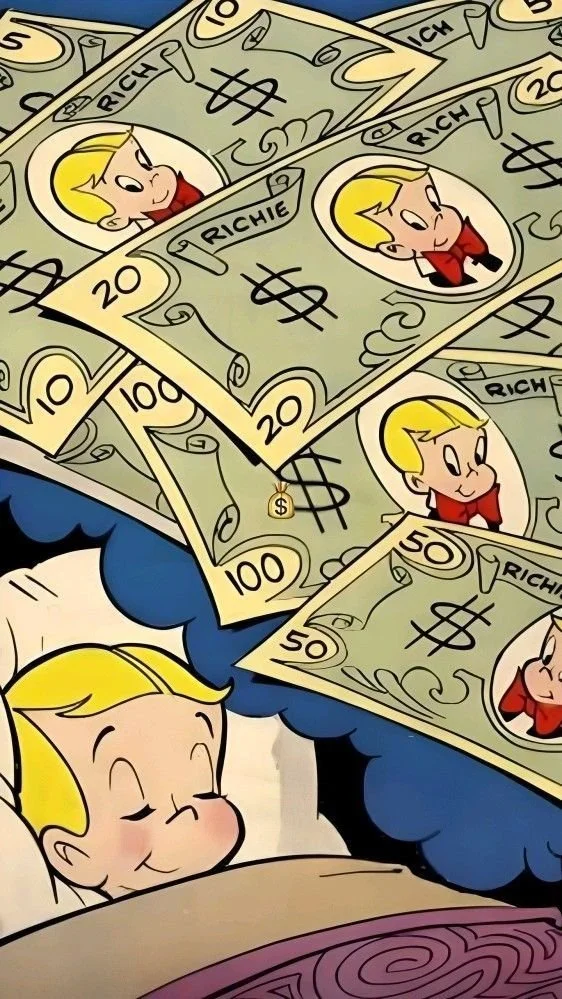
People don’t like their artists coming from wealth and privilege; nepotism is highly frowned upon. It makes us feel as though we are being cheated out of our dreams and aspirations. It’s as if we have accepted that in the corporate world this kind of chicanery is meant to take place, so we must fight back as hard as we can to keep “nepo babies” from infiltrating the art world. If we see a work of art that we enjoy, we will begin to think less of it upon learning that it came from privilege. It is hard to look past the absence of struggle in a medium that is meant to showcase and reconcile such feelings.
Seeing how successful and impactful Banksy has been, if she were to reveal her identity as being a blue-blooded individual, I often wonder how that would impact the reception of her future works. If she were to comment on working-class struggles, would people turn a blind eye to her perspective and assume she does not know what it is to be hungry? I imagine that is the case. I certainly count myself among the group of people who are intolerant of happy and comfortable artists.
There is an argument that perhaps still hasn’t been settled to this day, which asks the question: would artists like Jimi Hendrix have created the kind of music that they did if not for the influence of drugs? I believe drugs played a role in the music, but not so much that without them they would have been talentless. I believe it coloured their perception of the world and how they translated their thoughts and beliefs into music.
Similarly, there is a notion among artists that the greatest art is influenced by pain and that the greater the pain, the more rich the art is that comes of it. Not all artists are tortured, and even the ones who have had regular lives, void of extreme pain, manage to create art worth sharing. It is the people who decide whether or not the art is worth sharing, not the pain or even the artist who created it because ultimately it is the people who interpret and distribute the art among themselves.
The advent of artificial intelligence has proven that resources do not equate to artistic talent. AI feels no pain, has no true life experience, yet it can create masterpieces worthy of museum glass. While technically proficient, it is still missing that component which bridges the mundane with the nonsensical. That thing which exists at the fringes of our imaginations and creativity, which allows us to close the gap and explain that which lacks explanation.
As people who experienced mostly the same lives, with the main contrast being the earning power of our households, there isn’t much diversity in the pain we bring to the canvas. Each trauma that is soothed by the stroke of a pen or the moulding of clay can usually be traced back to the finances of the home that created it. For a home that has no shortage of funds, there is a uniqueness in the pain that rises to the surface, a pain that is often ignored since we believe most of, if not all, of our problems could be solved if we had what they had, which is the most basic misunderstanding of how the other side lives. Barring the wealthy from entering our artistic arenas only serves to widen the gap between the classes as we grow entrenched in our pain along with our blind spots for anyone earning more than us.
Ultimately, there is no boxing anyone out of anywhere. If the child of an aristocrat wishes to create art, there are many more wealthy children who feel the same way. Their parents have an excess of money sitting around looking to be invested in something. If they can’t invest in creating art with the poor, they will create art with their fellow rich. Exclusively.
