HOUSE OF MIRRORS
I loved action movies growing up, still do. Nothing better than a dumb action movie from the ‘80s with a basic story and lots of bullets being chewed up by a giant machine gun in the hands of a muscle-bound freak like Arnold Schwarzenegger. For a young boy, an image like that is aspirational. You see those giant biceps and think to yourself, that’s gonna be me! Lots of guys end up in the gym for that very reason, some even become bodybuilders. I remember seeing 007 and thinking how much I wanted to be James Bond, from the sharp suits to the shiny cars and the beautiful girls, it really seemed like he had it all going for him.
The influences that shape the experience of a young girl’s childhood are not as simple as what I grew up with. Had I swapped places with my sister at birth, I would probably have chosen a pop star to idolize instead of some gun-slinging action hero. Maybe someone like Hannah Montana and later Miley Cyrus as she became a hyper-sexualized pop star like Britney Spears before her. I would see Kim Kardashian release a sex tape and create an empire, completely flipping the entire heroin chic aesthetic onto its head. Her family would go on to continue shifting the landscape of female beauty standards as Kylie Jenner made cosmetic surgery a very socially acceptable and nonchalant thing for women to do.
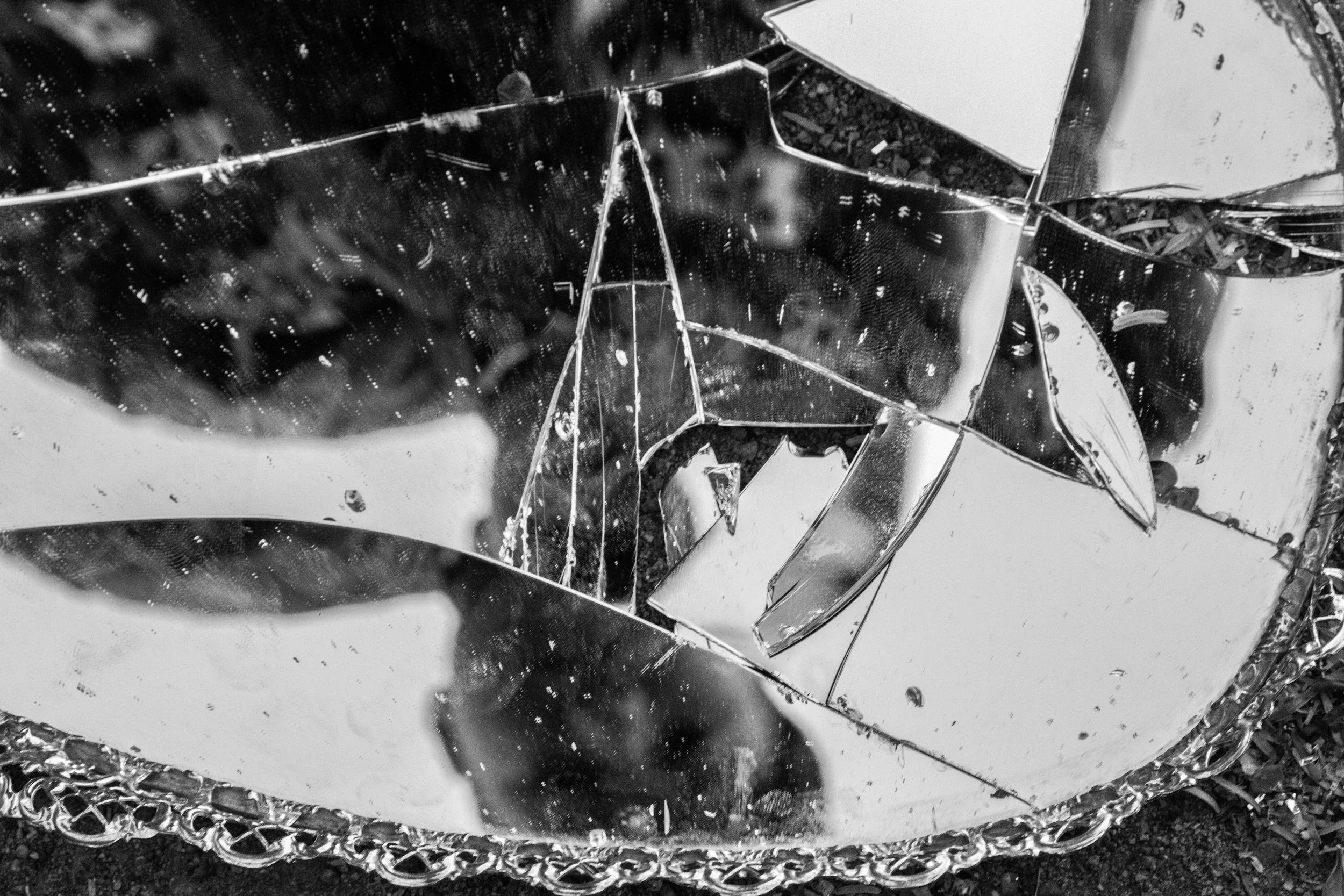
Herein lies what I have taken to calling the house of mirrors. Your selfie is akin to your social security, and your physical reality is a fiction, as is everybody else’s. It’s not anything people are blind to, but it is something people seem to turn a blind eye to. We all realize that the reality we are seeing online is a curated lie, but we agree to the social contract because we too are participating in and facilitating this lie. As we hear talk of simulation theory and the Mandela effect, there is a world that has been growing in population all around us that we are just now waking up to. Mark Zuckerberg would have us call it the Meta Verse, but for most of us, we experience it through social media. We no longer aspire to fictional characters we would like to model our lives around but instead follow other people who showcase lifestyles that are unattainable to most, either due to the sheer expense or the physical toll it would take.
As the tech bros get better and better at understanding human nature and fine-tune the algorithm to better serve our wants and needs, we are driven further from our original drive to uplift and provide for others. We are driven further and further into the house of mirrors, and our actions serve our mirror selves, being shaped and formed by the feedback received by faceless critics in the aether of the internet. We also begin to curate our lives and share only what we deem to be acceptable to the tribe of our online communities. This matrix of identity closes in on itself with each update until reality is completely phased out.
With the proliferation of social platforms, the need to adapt to the new paradigm grows more and more important with the introduction of each new technology. Each day, analogue tech becomes increasingly obsolete; if you don’t know how to use the internet, you are likely not a participant in daily life today. Without basic knowledge of how to use technology, we disqualify ourselves from being a part of society in any meaningful way and resign ourselves to live a Unabomber-like lifestyle.
Similarly, being on social media is becoming increasingly important in this day and age. Especially for the young. Even successful actors and actresses aren’t exempt from this, as Hollywood has been leveraging follower counts against movie deals. This leads to a kind of social survival occurring where the social media landscape has become a jungle of sorts, and there is a clear distinction between the monkeys hurling poop and the lions and tigers. In between those extremes are people either striving or surviving, and neither is easy to manage. As the world begins to shift online, the house of mirrors becomes more primary than the offhand distraction it was originally designed to be. With reality being left behind, is it really so silly to think of the mirror self as being more than just an idea?
SOURCES
DeFino, Jessica. “Jessica DeFino on Instagram.” Instagram, 2017, www.instagram.com/reel/DPywSq8EWed/?utm_source=ig_web_copy_link&igsh=MzRlODBiNWFlZA==. Accessed 31 Oct. 2025.
Allen, Maya. “The Most Popular Beauty Trend the Year You Were Born.” Marie Claire, 13 June 2019, www.marieclaire.com/beauty/g24738184/beauty-trends-through-the-years/? Accessed 31 Oct. 2025.
Tromans, Chelsea. “Welcome to Zscaler Directory Authentication.” Who.com.au, 27 July 2023, www.who.com.au/lifestyle/beauty/kylie-jenner-plastic-surgery-before-after-photos/. Accessed 31 Oct. 2025.
Campoamor, Danielle. “Like a Virgin: How Purity Culture Harmed Britney Spears & a Generation of Pop Stars.” Www.refinery29.com, 1 July 2021, www.refinery29.com/en-us/2021/07/10555257/britney-spears-virgin-sexuality-90s-pop-star-culture.
Wiest, Brianna. “Sophie Turner Says Her Social Media Following Helped Land Her an Acting Role.” Teen Vogue, 3 Aug. 2017, www.teenvogue.com/story/sophie-turner-social-media-following-role. Accessed 31 Oct. 2025.
IMAGES
https://stock.adobe.com/search?k=broken+mirror+woman
